You know those days when you’re staring into the fridge, completely uninspired, yet craving something fresh and satisfying? That’s how my love affair with Mediterranean hummus bowls began. I was sick of sad desk lunches and needed something vibrant that wouldn’t leave me crashing by 3 PM. The first time I piled creamy hummus with rainbow veggies and fluffy quinoa, it was a revelation—like sunshine in a bowl.
Now these hummus bowls are my go-to for healthy lunch prep. They’re ridiculously simple (we’re talking 15 minutes, tops), packed with nutrients, and somehow manage to feel indulgent while being genuinely good for you. The best part? You probably have most ingredients already. Just grab whatever crisp veggies are hanging out in your fridge, some good hummus (homemade if you’re feeling fancy), and let’s make magic happen.
Table of Contents
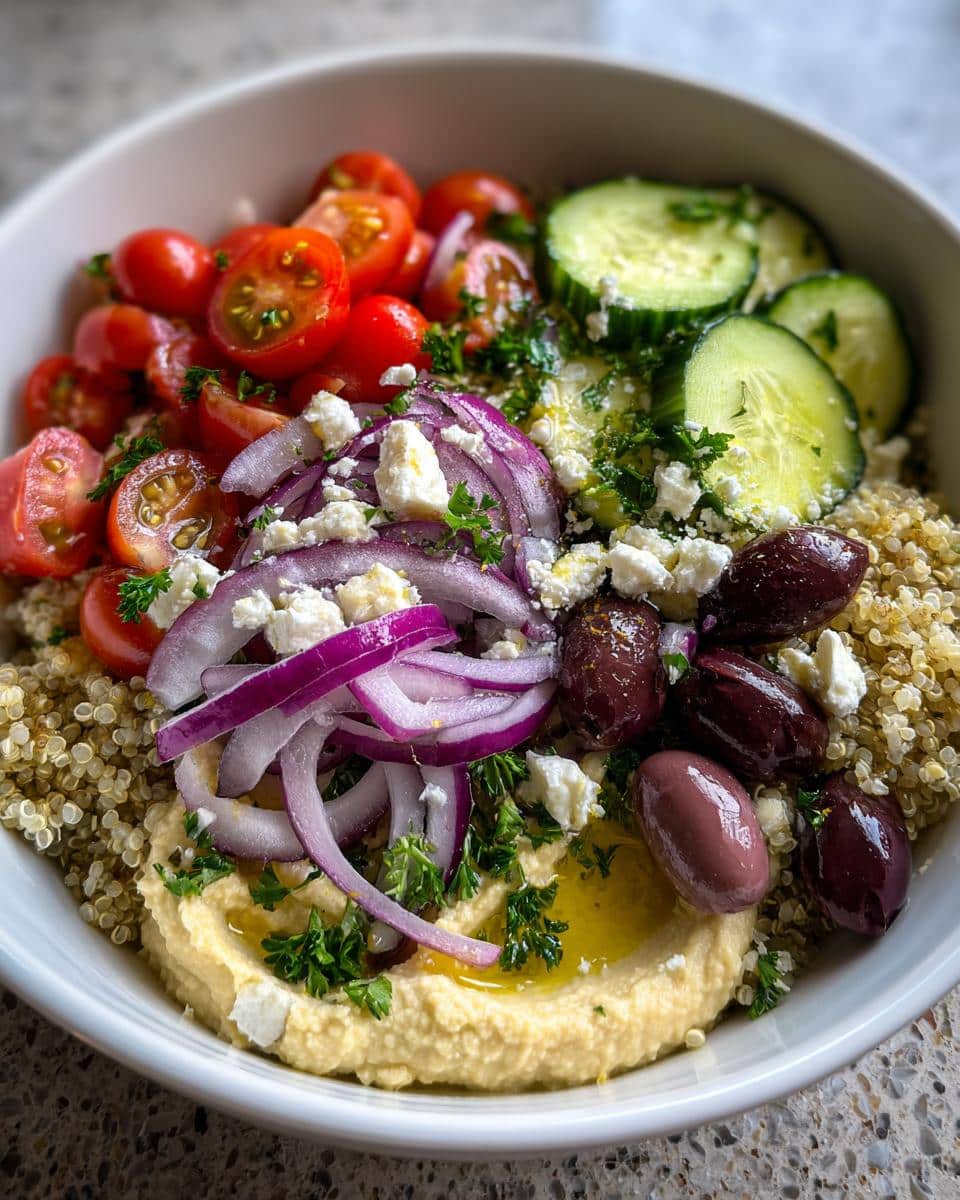
Why You’ll Love These Mediterranean Hummus Bowls
Let me count the ways these bowls will become your new lunch obsession:
- Effortless assembly: No cooking required beyond boiling some quinoa (and even that’s optional if you use leftovers)
- Nutrition powerhouse: Packed with plant-based protein, fiber, and all those gorgeous Mediterranean diet benefits
- Endlessly customizable: Swap ingredients based on what’s in season or what’s lurking in your fridge
- Meal prep dream: The components keep beautifully for days, making healthy eating actually achievable
- Flavor explosion: Creamy hummus, briny olives, crisp veggies – every bite is a party in your mouth
Seriously, these Mediterranean hummus bowls check every box for busy people who still want to eat like royalty.
Ingredients for Mediterranean Hummus Bowls
Okay, let’s gather our colorful cast of characters. The beauty of these bowls is how simple the ingredients are – you might already have most in your kitchen right now. Here’s what you’ll need for two generously portioned bowls (or one very hungry person):
- 1 cup cooked quinoa (I like tri-color for extra visual pop, but any variety works)
- 1/2 cup hummus – packed right into that measuring cup (store-bought is fine, but oh my, homemade takes it next-level)
- 1/2 cup cherry tomatoes, halved (those sweet little bursts of juice)
- 1/2 cucumber, diced (leave the skin on for color and crunch)
- 1/4 red onion, thinly sliced (soak in ice water for 5 minutes if you want to tame the bite)
- 1/4 cup kalamata olives (pitted, because no one likes surprise olive pits)
- 1/4 cup crumbled feta cheese (the salty, creamy crown jewel)
- 1 tbsp extra virgin olive oil (the good stuff you save for finishing)
- 1 tsp fresh lemon juice (just a bright kiss of acidity)
- 1/4 tsp sea salt & 1/4 tsp black pepper (to taste, always to taste)
- Fresh parsley for garnish (those green flecks make everything look fancy)
See? Nothing fussy or hard-to-find. Now let’s turn these simple ingredients into something magical.
How to Make Mediterranean Hummus Bowls
Alright, let’s get building. The best part about these bowls is how they come together like an edible work of art. I promise it’s easier than arranging flowers – and way tastier. Just follow these simple steps and you’ll have Instagram-worthy lunches in no time.
Step 1: Prepare the Base
First, grab your favorite bowls – wide, shallow ones work best so you can see all those beautiful layers. Scoop out that gorgeous hummus and use the back of a spoon to spread it evenly across the bottom. Don’t be shy. This creates a creamy foundation that’ll make every bite dreamy.
Now take your slightly cooled quinoa (hot quinoa will make the hummus melt into a sad puddle) and gently layer it over the hummus. I like to make little quinoa mountains that peek through the veggies later. If you’re using leftover quinoa from the fridge, a quick 30-second microwave zap takes the chill off.
Step 2: Add the Vegetables
Here’s where the fun begins. Arrange your halved cherry tomatoes around the edges first – their bright red color makes the bowl pop. Scatter the diced cucumber in between, then artfully place those thin red onion slices (they’ll look like little pink ribbons).
Tuck the kalamata olives into the gaps – I usually do about 6-8 per bowl. The key is making it look casually perfect, like you just tossed everything together effortlessly (we’ll keep your kitchen mess our little secret).
Step 3: Finish and Serve
Almost there, Now the magical finishing touches: crumble that salty feta over everything (extra never hurts), then drizzle with your best olive oil and that bright lemon juice. A pinch of salt and pepper brings all the flavors to life.
Finally, tear some fresh parsley leaves over the top – this isn’t just decoration, that fresh herbal note cuts through the richness perfectly. Grab a spoon and dig in immediately, or pack it up for lunch (just wait to add the olive oil and lemon until you’re ready to eat).
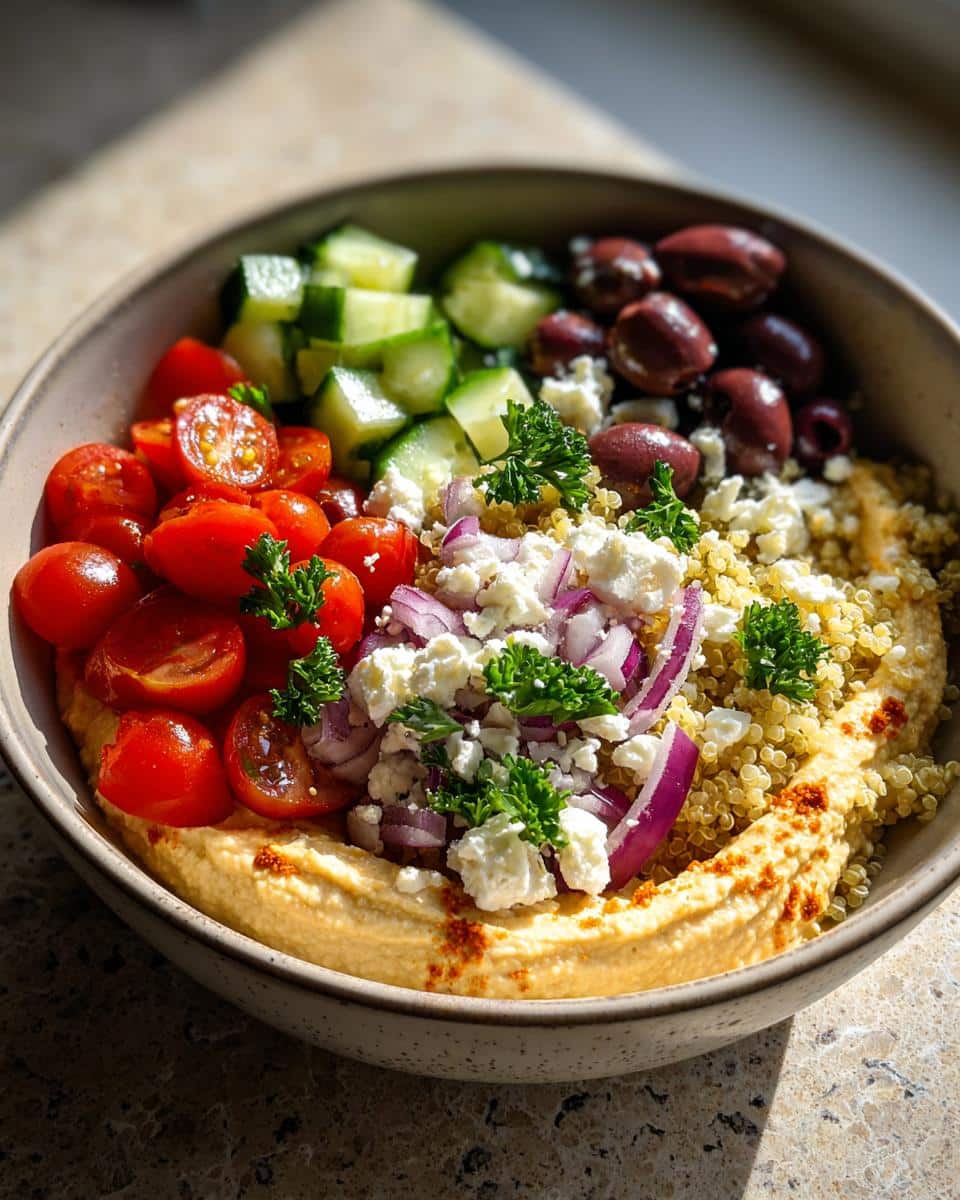
See? You’ve just created a Mediterranean masterpiece in less time than it takes to wait for delivery.
Tips for Perfect Mediterranean Hummus Bowls
After making these hummus bowls weekly for years (yes, I’m obsessed), I’ve picked up some tricks that take them from good to “can’t-stop-eating” amazing:
- Hummus matters: Splurge on good store-bought or make your own – the flavor difference is night and day. My secret? Add a spoonful of tahini and extra lemon to really make it sing.
- Prep ahead like a pro: Chop all your veggies Sunday night and store them in separate containers. Come lunchtime, assembly takes 2 minutes flat.
- Texture is key: Keep components crisp by storing dressing separately. That olive oil drizzle right before eating? Magic.
- Temperature play: Room temp hummus spreads beautifully, while chilled veggies add refreshing crunch.
Trust me, these little touches make all the difference.
Ingredient Substitutions & Variations
One of my favorite things about these Mediterranean hummus bowls is how forgiving they are. Don’t have quinoa? No problem. Here are my go-to swaps and fun twists to keep things interesting:
- Grain game: Brown rice, couscous, or even farro work beautifully instead of quinoa. For a low-carb option, try cauliflower rice – just pat it dry really well first.
- Protein boost: Add grilled chicken, chickpeas (roasted for extra crunch), or flaked salmon for heartier bowls. My husband loves when I toss in some sliced grilled halloumi cheese.
- Veggie variations: Swap cucumbers for roasted red peppers, add avocado slices (always a good idea), or throw in some artichoke hearts when you’re feeling fancy.
- Cheese choices: Not a feta fan? Try crumbled goat cheese or shaved parmesan. For vegan versions, nutritional yeast adds a nice cheesy flavor.
- Hummus hacks: Experiment with different hummus flavors – roasted red pepper or garlic hummus are personal favorites.
The beauty is there are no wrong answers – just tasty discoveries waiting to happen.
Serving and Storage Suggestions
These Mediterranean hummus bowls are at their absolute best fresh, but let’s be real – sometimes you need to prep ahead. Here’s how to keep them tasting amazing:
- Storage smarts: Keep assembled bowls (without oil/lemon) in airtight containers for up to 2 days. The veggies stay surprisingly crisp.
- Revival tips: If the hummus dries out, just stir in a teaspoon of water before serving. Add the olive oil and lemon juice right before eating.
- Perfect pairings: Warm pita bread is classic, but I also love crunchy pita chips for scooping. A simple side of tabbouleh or baba ganoush makes it a feast.
Pro tip: Pack components separately for work lunches – assembly takes seconds and everything stays fresh.
Mediterranean Hummus Bowls Nutritional Info
Okay, let’s talk numbers. One serving of this Mediterranean hummus bowl packs serious nutrition without skimping on flavor. Here’s the breakdown for those keeping track (based on my standard recipe with quinoa and feta):
- Calories: 420 (but so filling you won’t be hungry again in an hour like with sad salads)
- Protein: 12g (thanks to that powerhouse combo of hummus and quinoa)
- Fiber: 8g (keeping things moving smoothly, if you know what I mean)
- Healthy fats: 22g (mostly from the olive oil and hummus – the good kind)
- Carbs: 45g (but complex carbs that give you steady energy)
Now, my grandma always said “food is more than numbers,” and she was right. The real magic is in all those vitamins from the colorful veggies – think vitamin C from tomatoes, potassium from cucumbers, and antioxidants from the olive oil. It’s like a multivitamin you actually want to eat.
Quick note: These values can change based on your exact ingredients. Using cauliflower rice instead of quinoa? That’ll lower the carbs. Adding extra feta? More protein (and no judgment from me). Homemade hummus with less oil? Adjust those fat grams. The beauty is you can tweak it to fit your needs while still keeping it delicious.
What matters most is that you’re getting a balanced meal that tastes amazing and makes you feel good – now that’s what I call smart eating. What matters most is that you’re getting a balanced meal that tastes amazing and makes you feel good – now that’s what I call smart eating.
FAQs About Mediterranean Hummus Bowls
Can I meal prep these hummus bowls ahead of time?
Absolutely, These are my go-to healthy lunch prep solution. Just store components separately – keep hummus and quinoa in one container, veggies in another. Assemble right before eating to maintain that perfect crunch. They’ll stay fresh for 2-3 days in the fridge.
Are Mediterranean hummus bowls gluten-free?
They sure can be, Just use quinoa or rice instead of couscous, and double-check your hummus ingredients (some brands add wheat). Naturally vegetarian and easily made vegan by skipping the feta – these bowls adapt to almost any diet.
What’s the best hummus for these bowls?
I’m partial to homemade (extra garlicky is my weakness), but any good-quality store-bought works. Look for hummus with simple ingredients – chickpeas, tahini, olive oil, lemon. The flavored varieties like roasted red pepper add fun twists too.
Can I add meat to make it heartier?
Oh yes, Grilled chicken, lamb meatballs, or even shrimp turn this into a dinner-worthy meal. My husband loves when I add leftover gyro meat – just warm it slightly before topping the bowl.
Help! My hummus makes everything soggy.
Ah, rookie mistake. Spread hummus thickly on the bottom and let quinoa cool completely before layering. Pack dressings separately if prepping ahead. Those crisp veggies should stay perky until the last bite.
15Minute Mediterranean Hummus Bowls That Taste Like Sunshine

A nutritious and flavorful Mediterranean hummus bowl packed with fresh vegetables, creamy hummus, and hearty grains for a satisfying meal.
- Prep Time: 15 mins
- Cook Time: 15 mins
- Total Time: 30 mins
- Yield: 2 servings
- Category: Lunch
- Method: No-Cook
- Cuisine: Mediterranean
- Diet: Vegetarian
Ingredients
- 1 cup cooked quinoa
- 1/2 cup hummus
- 1/2 cup cherry tomatoes, halved
- 1/2 cucumber, diced
- 1/4 red onion, thinly sliced
- 1/4 cup kalamata olives
- 1/4 cup crumbled feta cheese
- 1 tbsp olive oil
- 1 tsp lemon juice
- 1/4 tsp salt
- 1/4 tsp black pepper
- Fresh parsley for garnish
Instructions
- Cook quinoa according to package instructions and let it cool slightly.
- In a bowl, spread the hummus evenly at the bottom.
- Layer the cooked quinoa over the hummus.
- Arrange cherry tomatoes, cucumber, red onion, and olives on top.
- Sprinkle feta cheese over the vegetables.
- Drizzle olive oil and lemon juice over the bowl.
- Season with salt and black pepper.
- Garnish with fresh parsley before serving.
Notes
- Use store-bought or homemade hummus.
- Swap quinoa for brown rice or couscous if preferred.
- Add grilled chicken or chickpeas for extra protein.
- Store leftovers in an airtight container for up to 2 days.